
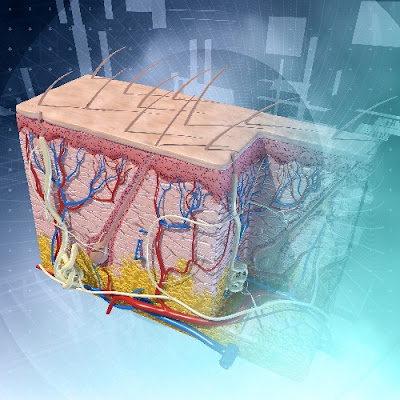
Skin color, texture, and folds help distinguish people as individuals. Anything that interferes with skin function or causes changes in appearance can have important consequences for physical and mental health. Dermatologists are the medical doctors who diagnose and treat disorders of the skin.
Many problems that appear on the skin are limited to the skin. Sometimes, however, the skin provides clues to a disorder that affects the entire body. Consequently, doctors often must consider many possible diseases when evaluating skin problems. They may need to order blood tests or other laboratory tests to look for an internal disease in people who come to them with a skin problem.
Acne and Related Disorders
Acne is a common skin condition causing pimples on the face and upper torso.
Bacterial Skin Infections
The skin provides a remarkably good barrier against bacterial infections. Although many bacteria come in contact with or reside on the skin, they are normally unable to establish an infection. When bacterial skin infections do occur, they can range in size from a tiny spot to the entire body surface. They can range in seriousness as well, from harmless to life threatening.
Biology of the Skin
The skin is the body’s largest organ. It serves many important functions , including regulating body temperature, maintaining water and electrolyte balance, and sensing painful and pleasant stimuli. The skin keeps vital chemicals and nutrients in the body while providing a barrier against dangerous substances from entering the body and provides a shield from the harmful effects of ultraviolet radiation emitted by the sun. In addition, skin color, texture, and folds help mark people as individuals. Anything that interferes with skin function or causes changes in appearance can have important consequences for physical and mental health.
Blistering Diseases
A blister (bulla, or, when small, a vesicle) is a bubble of fluid that forms beneath a thin layer of dead skin. The fluid is a mixture of water and proteins that oozes from injured tissue. Blisters most commonly form in response to a specific injury, such as a burn or irritation, and usually involve only the topmost layers of skin. These blisters heal quickly, usually without leaving a scar. Blisters that develop as part of a systemic (bodywide) disease may start in the deeper layers of the skin and cover widespread areas. These blisters heal more slowly and may leave scars.
Fungal Skin Infections
Fungi usually make their homes in moist areas of the body where skin surfaces meet: between the toes, in the genital area, and under the breasts. Common fungal skin infections are caused by yeasts (such as Candida— or dermatophytes, such as Epidermophyton, Microsporum, and Trichophyton . Many such fungi live only in the topmost layer of the epidermis (stratum corneum) and do not penetrate deeper. Obese people are more likely to get these infections because they have excessive skinfolds. People with diabetes tend to be more susceptible to fungal infections as well.
Hair Disorders
Hair originates in the hair follicles. These follicles are located in the dermis, the skin layer just below the surface layer and above the subcutaneous fat. Hair follicles are present everywhere on the surface of the body except the lips, palms of the hands, and soles of the feet. New hair is made in the hair matrix at the base of the hair follicle. Living cells in the hair matrix multiply and push upward. These cells rapidly dehydrate, die, and compact into a dense, hard mass that forms the hair shaft. The hair shaft, which is made up of dead protein, is covered by a delicate covering (cuticle) composed of platelike scales.
Hypersensitivity and Inflammatory Skin Disorders
Hypersensitivity and inflammatory skin disorders are caused by immune system reactions that involve the skin.
Itching and Dermatitis
Itching can be very uncomfortable. It is one of the most common reasons people see doctors who specialize in skin disorders (dermatologists).
Nail Disorders
Many disorders can affect the nails, including deformities, dystrophies, infections, and ingrown toenails. Infections can involve any part of the nail and may or may not change the nail's appearance. Most nail infections are fungal (onychomycosis—, but bacterial and viral infections occur.


Noncancerous Skin Growths
Cells of the skin and underlying tissue may accumulate and cause growths. Growths may be raised or flat and range in color from dark brown or black to flesh-colored to red. They may be present at birth or develop later.
Parasitic Skin Infections
Most skin parasites are tiny insects or worms that burrow into the skin and make their home there. Some parasites live in the skin for part of their life cycle. Other parasites live in the skin for their entire life cycle. Parasitic skin infections frequently cause severe itching and inflammation. Parasitic skin infections include
Pigment Disorders
Melanin is the brown pigment that produces the various shades and colors of human skin. Coloration (pigmentation) is determined by the amount of melanin in the skin. Without melanin, the skin would be pale white with shades of pink caused by blood flow through the skin. Fair-skinned people produce very little melanin, darker-skinned people produce moderate amounts, and very dark-skinned people produce the most. People with albinism have little or no melanin and thus their skin appears white or pale pink. Usually, melanin is fairly evenly distributed in the skin, but sometimes people have spots or patches of skin with more melanin. Examples of such spots include freckles, age spots ( lentigines), and melasma.
Pressure Sores
Pressure sores are areas of skin damage resulting from a lack of blood flow due to pressure.
Psoriasis and Scaling Disorders
Psoriasis , pityriasis rosea , lichen planus Lichen Planus), and lichen sclerosus ( Lichen Sclerosus) are different skin disorders that have been grouped together because the bumps, rashes, scales, and skin discoloration they cause have similar characteristics. That is, the rashes and bumps have well-defined borders, and the scales usually do not crust, crack, or weep with fluid.
Skin Cancers
Skin cancer is the most common type of cancer. Skin cancer is most common among people who work or play sports outside and among sunbathers. Fair-skinned people are particularly susceptible to developing most forms of skin cancer because they produce less melanin. Melanin, the protective pigment in the outer layer of skin (epidermis), helps protect the skin from ultraviolet (UV) light. However, skin cancer also can develop in dark-skinned people and in people whose skin has not had significant sun exposure. Skin cancers may also develop years after x-ray therapy or exposure to substances that cause cancer (for example, ingestion of arsenic).
Sunlight and Skin Damage
Sunlight stimulates vitamin D production, helps control some chronic skin diseases (such as psoriasis), and causes a sense of well-being. Yet sunlight can also cause damage to the skin. Damage includes not only a painful sunburn Sunburn) but skin cancers, wrinkling and other changes associated with aging skin, and even allergic reactions and worsening of some skin diseases ( Photosensitivity Reactions). The skin shields the rest of the body from the sun's rays.
Sweating Disorders
Sweat is made by sweat glands in the skin and carried to the skin’s surface by ducts.
Treatment of Skin Disorders
Topical drugs (drugs applied directly to the skin) are a mainstay of treating skin disorders. Systemic drugs are taken by mouth or given by injection and are distributed throughout the body. Rarely, when a high concentration of a drug is needed at the affected area, a doctor injects the drug just under the skin (intradermal injection).
Viral Skin Infections
Many viral infections, such as measles ( Measles), chickenpox (Chickenpox), and rubella ( Rubella), cause rashes, spots, or sores on the skin, as well as other symptoms. Herpesviruses often cause rashes and sores (Herpes Simplex Virus Infections). However, in two common viral infections, warts ( Warts) and molluscum contagiosum (Molluscum Contagiosum), the virus remains solely within the skin and does not spread to other parts of the body.

