Showing posts with label Health Diseases & Conditions. Show all posts

Tobacco control can save billions of dollars and millions of lives

 Policies to control tobacco use, including tobacco tax and price increases, can generate significant government revenues for health and development work, according to a new landmark global report from WHO and the National Cancer Institute of the United States of America. Such measures can also greatly reduce tobacco use and protect people’s health from the world’s leading killers, such as cancers and heart disease.
But left unchecked, the tobacco industry and the deadly impact of its products cost the world’s economies more than US$ 1 trillion annually in healthcare expenditures and lost productivity, according to findings published in The economics of tobacco and tobacco control. Currently, around 6 million people die annually as a result of tobacco use, with most living in developing countries.
The almost 700-page monograph examines existing evidence on two broad areas:
  • The economics of tobacco control, including tobacco use and growing, manufacturing and trade, taxes and prices, control policies and other interventions to reduce tobacco use and its consequences; and
  • The economic implications of global tobacco control efforts.
"The economic impact of tobacco on countries, and the general public, is huge, as this new report shows," says Dr Oleg Chestnov, WHO’s Assistant Director-General for Noncommunicable Diseases (NCDs) and mental health. "The tobacco industry produces and markets products that kill millions of people prematurely, rob households of finances that could have been used for food and education, and impose immense healthcare costs on families, communities and countries."
Globally, there are 1.1 billion tobacco smokers aged 15 or older, with around 80% living in low- and middle-income countries. Approximately 226 million smokers live in poverty.
The monograph, citing a 2016 study, states that annual excise revenues from cigarettes globally could increase by 47%, or US$ 140 billion, if all countries raised excise taxes by about US$ 0.80 per pack. Additionally, this tax increase would raise cigarette retail prices on average by 42%, leading to a 9% decline in smoking rates and up to 66 million fewer adult smokers.
"The research summarized in this monograph confirms that evidence-based tobacco control interventions make sense from an economic as well as a public health standpoint," says the monograph's co-editor, Distinguished Professor Frank Chaloupka, of the Department of Economics at the University of Illinois at Chicago.
The monograph’s major conclusions include:
  • The global health and economic burden of tobacco use is enormous and is increasingly borne by low- and middle-income countries (LMICs). Around 80% of the world’s smokers live in LMICs.
  • Effective policy and programmatic interventions exist to reduce demand for tobacco products and the death, disease, and economic costs resulting from their use, but these interventions are underused. The WHO Framework Convention on Tobacco Control (WHO FCTC) provides an evidence-based framework for government action to reduce tobacco use.
  • Demand reduction policies and programmes for tobacco products are highly cost-effective. Such interventions include significant tobacco tax and price increases; bans on tobacco industry marketing activities; prominent pictorial health warning labels; smoke-free policies and population-wide tobacco cessation programmes to help people stop smoking. In 2013-2014, global tobacco excise taxes generated nearly US$ 269 billion in government revenues. Of this, less than US$ 1 billion was invested in tobacco control.
  • Control of illicit trade in tobacco products is the key supply-side policy to reduce tobacco use and its health and economic consequences. In many countries, high levels of corruption, lack of commitment to addressing illicit trade, and ineffective customs and tax administration, have an equal or greater role in driving tax evasion than do product tax and pricing. The WHO FCTC Protocol to Eliminate Illicit Trade in Tobacco Products applies tools, like an international tracking and tracing system, to secure the tobacco supply chain. Experience from many countries shows illicit trade can be successfully addressed, even when tobacco taxes and prices are raised, resulting in increased tax revenues and reduced tobacco use.
  • Tobacco control does not harm economies: The number of jobs dependent on tobacco has been falling in most countries, largely due to technological innovation and privatization of once state-owned manufacturing. Tobacco control measures will, therefore, have a modest impact on related employment, and not cause net job losses in the vast majority of countries. Programmes substituting tobacco for other crops offer growers alternative farming options.
  • Tobacco control reduces the disproportionate health and economic burden that tobacco use imposes on the poor. Tobacco use is increasingly concentrated among the poor and other vulnerable groups.
  • Progress is being made in controlling the global tobacco epidemic, but concerted efforts are needed to ensure progress is maintained or accelerated. In most regions, tobacco use prevalence is stagnant or falling. But increasing tobacco use in some regions, and the potential for increase in others, threatens to undermine global progress in tobacco control.
  • The market power of tobacco companies has increased in recent years, creating new challenges for tobacco control efforts. As of 2014, 5 tobacco companies accounted for 85% of the global cigarette market. Policies aimed at limiting the market power of tobacco companies are largely untested but hold promise for reducing tobacco use.
Dr Douglas Bettcher, WHO Director for the Prevention of NCDs, says the new report gives governments a powerful tool to combat tobacco industry claims that controls on tobacco products adversely impact economies. "This report shows how lives can be saved and economies can prosper when governments implement cost-effective, proven measures, like significantly increasing taxes and prices on tobacco products, and banning tobacco marketing and smoking in public," he adds.
Tobacco control is a key component of WHO’s global response to the epidemic of NCDs, primarily cardiovascular disease, cancers, chronic obstructed pulmonary disease and diabetes. NCDs account for the deaths of around 16 million people prematurely (before their 70th birthdays) every year. Reducing tobacco use plays a major role in global efforts to achieve the Sustainable Development Goal of reducing premature deaths from NCDs by one-third by 2030.

Protect Your Skin

1. Consider Your Water

And tailor your skin-care products accordingly. “Soft water doesn’t remove soap well, so it can leave a residue on your skin,” says Susan H. Weinkle, an assistant clinical professor of dermatology at the University of South Florida, in Tampa. If your water is soft, use face and body cleansers sparingly (no more than a nickel- or quarter-size amount, respectively). Hard water, on the other hand, doesn’t allow washes to lather easily, prompting you to use even more cleanser, which can cause dryness. Gentle, nonsoap formulas, which aren’t meant to lather, can minimize this, says Carolyn Jacob, a dermatologist in Chicago. Experts suggest trying Avène Extremely Gentle Cleanser ($23,). To check the water quality in your area, log on to the Environmental Protection Agency’s website (epa.gov).

2. Drink Green Tea

“If your complexion is red or blotchy, this tea’s anti-inflammatory properties can be soothing,” says Andrea Cambio, a dermatologist in Cape Coral, Florida. “Iced is best because hot beverages can worsen redness and other symptoms of rosacea.” Another benefit: The epigallocatechin gallate (EGCG) in green tea may help prevent the collagen destruction that leads to wrinkles as well as sun-induced DNA damage in the skin (think lines and discoloration), according to some experts. Consider subbing tea for your morning mug of coffee.

3. Keep Stress in Check

It takes a toll on nearly every part of your body, including your skin. In a study conducted at Stanford University, researchers found that during exam time, students who felt stressed had more severe acne breakouts than did those under less pressure. That’s because stress increases the body’s production of hormones such as cortisol, which can make skin oilier and decrease its ability to fight off acne-causing bacteria, says Lisa Donofrio, an associate clinical professor of dermatology at the Yale University School of Medicine. To keep that frazzled feeling under control, regularly practice stress-management techniques, like yoga, deep breathing, and meditation. This “can help conditions such as acne, psoriasis, rosacea, and seborrhea,” Donofrio says

4. Improve Your Air Quality

Avoiding smoky environments is smart, since “just being around smoke can lead to the release of free radicals that damage skin and hasten aging,” says Diane S. Berson, an assistant clinical professor of dermatology at the Weill Medical College of Cornell University, in New York City. Other indoor pollutants can adversely affect skin, too. Change the air filter in your furnace regularly, and if you cook with oil, use the fan over your range. Also keep in mind that dry indoor air can dehydrate skin and make fine lines more noticeable. Run a humidifier in your bedroom to minimize these problems.


5. Switch to Plain Toothpaste

Those with tartar-control ingredients or added flavors, like cinnamon, may contribute to a common skin condition called perioral dermatitis. It looks like pimples, redness, and scaling around the mouth, says Donofrio. Use a basic paste instead, like Crest Cavity Protection Toothpaste ($4 at drugstores). Note: If you suffer from this problem, see a dermatologist for antibiotics to clear it up.


6. Watch Sun Exposure Indoors

Yes, you read it right: UV rays (in particular UVA rays) can penetrate the windows in your home and office and cause wrinkling and brown spots. The same goes for car windows: Studies have found higher rates of skin cancers on the left side of the face and upper body than on the right, since that side is more exposed when you’re driving. Cancers aside, “many people have more wrinkles and sun damage on the left side of their faces, too,” notes Donofrio. Make protection a no-brainer by always wearing a moisturizer with SPF. Try La Roche-Posay Anthelios SX Daily Moisturizing Cream With Mexoryl ($34).


7. Monitor Your Dairy Intake (If You Have Acne)

Research from the Harvard School of Public Health found that teenage girls who consume a lot of milk are almost 30 percent more likely to have acne than those who drink less, and experts believe the same holds true for adult women prone to serious breakouts. Surprisingly, skim milk seems to be a worse offender than whole milk. Scientists don’t understand exactly why milk products can lead to acne, but some surmise that the natural hormones present in dairy may be to blame, says Leslie Baumann, a dermatologist in Miami Beach, Florida, who notes that even organic milk can cause breakouts. Cottage cheese, instant breakfast drinks, and sherbet are also linked to acne. While cutting back on dairy won’t solve a pimple problem single-handedly, it may make a difference for those who suffer severe breakouts, say experts. (If you go this route, be sure you’re getting enough calcium from other food sources, such as leafy greens, or consider taking a supplement.)

8. Pay Attention to Your Cleanser

It may sound counterintuitive, but if you have dry skin, your choice of face wash may be even more important than your moisturizer. “A nonsoap cleanser is ideal because it helps replace the moisture barrier in the skin,” Donofrio says. “Consider it a preventive approach,” adds Berson. “You can use your cleanser to avoid dryness, eczema, and psoriasis rather than just treating these issues when they flare up.” A good, inexpensive, and natural one that Donofrio likes: Burt’s Bees Orange Essence Facial Cleanser ($8,). That said, applying a moisturizer after you cleanse is still smart. And if you’re using an acne medication, wait 10 minutes after you wash to minimize irritation.


9. Choose Water-Based Hair Products

Some conditioners, as well as pomades, volumizers, and styling creams, contain oils or waxes that can clog pores and create acne, especially on the forehead, the back, and the hairline. Even if you’re careful to avoid getting them on your skin, they can run down your face and body as you shower and when you sweat, or be transferred by your pillowcase while you sleep. Instead, look for water-based formulas and avoid those containing mineral oil, beeswax, or microcrystalline wax. Or consider Kairos hair products, a new line of water-based shampoos, conditioners, and styling aids created to help minimize breakouts (log on to kairosclear. for information).


10. Check Your Medicine Cabinet

Some oral contraceptives, antibiotics, fertility drugs, and antiseizure medications can bring on breakouts, says Jerome Litt, a dermatologist in Beachwood, Ohio. Antihistamines, diuretics, and some antidepressants can cause dry skin. And certain antibiotics, diuretics, and diabetes treatments can make you vulnerable to sun damage. “If you find your skin is reacting more while you’re taking a particular drug, talk to your physician,” says Litt. “He or she may be able to either lower the dosage or switch you to a different medication.”


11. Sleep a Full Night

While you’re snoozing, the skin’s repair mechanisms swing into action, says McBurney. Being sleep-deprived, by contrast, puts stress on the body, causing it to release more adrenaline and cortisol, which can trigger breakouts and other skin problems, says Barbara R. Reed, a clinical professor of dermatology at the University of Colorado, Denver. (And research from China found that insufficient sleep was a significant risk factor for acne among adolescents.) Make getting seven to eight hours of shut-eye your last good-skin move of each day

Lassa Fever – Liberia

Since 1 January 2016, WHO has been notified of at least 38 suspected cases of Lassa fever in Liberia.
Suspected cases were reported from 6 prefectures: Bong (17 cases, including 9 deaths), Nimba (14 cases, including 6 deaths), Gbarpolu (4 cases), Lofa (1 case), Margibi (1 case) and Montserrado (1 case).
Between 1 January and 3 April 2016, samples from 24 suspected cases were received for laboratory testing. Of these 24 suspected cases, 7 are reported to have tested positive for Lassa fever:
  • 2 cases were identified by polymerase chain reaction (PCR);
  • 2 cases were identified through the detection of IgM antibodies using enzyme-linked immunosorbent assay (ELISA);
  • 2 cases were identified through the detection of Lassa virus antigens using ELISA;
  • information on the type of testing employed to identify the seventh case is not currently available.
All the Lassa fever confirmed cases tested negative for Ebola virus disease. Since there are no designated laboratories in Liberia that can test samples for Lassa fever by PCR, specimens are currently sent for testing to Kenema, Sierra Leone.

Public health response

To date, 134 contacts have completed the 21-day follow-up period. A total of 17 additional contacts are being monitored. None of these contacts have so far developed symptoms.
Appropriate outbreak response measures, including case management, infection prevention and control, community engagement and health education, have been put in place by the national authorities with the support of WHO and partner organizations.

WHO risk assessment

Lassa fever is endemic in Liberia and causes outbreaks almost every year in different parts of the country. Based on experiences from previous similar events, it is expected that additional cases will be reported.
Although occasional travel-associated cases of Lassa fever have been reported in the past (see DON published on 27 and 8 April 2016), the risk of disease spread from Liberia to non-endemic countries is considered to be low. WHO continues to monitor the epidemiological situation and conduct risk assessments based on the latest available information.

WHO advice

Considering the seasonal flare ups of cases during this time of the year, countries in West Africa that are endemic for Lassa fever are encouraged to strengthen their related surveillance systems.
Health-care workers caring for patients with suspected or confirmed Lassa fever should apply extra infection control measures to prevent contact with the patient’s blood and body fluids and contaminated surfaces or materials such as clothing and bedding. When in close contact (within 1 metre) of patients with Lassa fever, health-care workers should wear face protection (a face shield or a medical mask and goggles), a clean, non-sterile long-sleeved gown, and gloves (sterile gloves for some procedures).
Laboratory workers are also at risk. Samples taken from humans and animals for investigation of Lassa virus infection should be handled by trained staff and processed in suitably equipped laboratories under maximum biological containment conditions.
The diagnosis of Lassa fever should be considered in febrile patients returning from areas where Lassa fever is endemic. Health-care workers seeing a patient suspected to have Lassa fever should immediately contact local and national experts for advice and to arrange for laboratory testing.

Nutritional Deficiencies


Nutritional deficiencies, known as malnutrition, are the result of your body not getting enough of the nutrients it needs. 

The body requires a wide range of vitamins and minerals that are pivotal for both advancement and counteracting sickness. These vitamins and minerals are frequently alluded to as micronutrients. They aren't delivered actually in the body, so you need to get them from your eating routine.

A healthful inadequacy happens when the body doesn't ingest the fundamental measure of a supplement. Lacks can prompt an assortment of wellbeing issues. These can incorporate issues of assimilation, skin issues, hindered or damaged bone development, and even dementia.

The measure of every supplement you ought to devour relies on upon your age. In the United States, numerous sustenances that you purchase in the market, (for example, oats, bread, and drain) are braced with supplements that are important to forestall wholesome lack. Be that as it may, now and again your body can't retain certain supplements regardless of the possibility that you are expending them.

It's conceivable to be lacking in any of the supplements that your body needs. Some basic sorts of wholesome lacks include:

Iron Deficiency

The most across the board nourishing insufficiency worldwide is iron inadequacy. Iron inadequacy can prompt frailty, a blood issue that causes weariness, shortcoming, and an assortment of different manifestations.

Iron is found in nourishments, for example, dim verdant greens, red meat, and egg yolks. It helps your body make red platelets. When you're iron insufficient, your body produces less red platelets. The red platelets it produces are littler and paler than solid platelets. They're additionally less effective at conveying oxygen to your tissues and organs.

As indicated by the World Health Organization (WHO), more than 30 percent of the world's populace experiences this condition. Indeed, it's the main healthful insufficiency that is pervasive in both creating and industrialized nations. Iron-insufficiency weakness influences such a variety of individuals that it's currently broadly perceived as a general wellbeing pandemic.

Vitamin A Deficiency

Vitamin A will be a gathering of supplements that is critical for eye wellbeing and working and conceptive wellbeing in men and ladies. It likewise has influence in reinforcing the safe framework against diseases. As per the WHO, an absence of vitamin An is the main source of preventable visual impairment in youngsters. Pregnant ladies who are lacking in vitamin A have higher maternal death rates too.

For infants, the best wellspring of vitamin An is bosom milk. For others, it's essential to eat a lot of sustenances that are high in vitamin A. These include:

milk

eggs

green vegetables, for example, kale, broccoli, and spinach

orange vegetables like carrots, sweet potatoes, and pumpkin

rosy yellow natural products, similar to apricots, papaya, and peaches

Vitamin B-1 (Thiamine) Deficiency

Another regular nutritious lack happens with vitamin B-1, otherwise called thiamine. Thiamine is a vital piece of your sensory system. It likewise helps your body transform sugars into vitality as a feature of your digestion system.

An absence of thiamine can bring about weight reduction and weariness, and also some psychological indications, for example, disarray and transient memory misfortune. Thiamine insufficiency can likewise prompt nerve and muscle harm and can influence the heart. In the United States, thiamine insufficiency is frequently found in the individuals who incessantly manhandle liquor. Liquor lessens the retention of thiamine, the body's capacity to store thiamine in the liver and the body's capacity to change over thiamine to a usable structure. Thiamine insufficiency is a typical reason for Wernicke-Korsakoff disorder.

Numerous breakfast oats and grain items in the United States are sustained with thiamine. Pork is additionally a decent wellspring of the vitamin.

Vitamin B-3 (Niacin) Deficiency

Vitamin B-3 (niacin) is another mineral that helps the body change over sustenance into vitality. A serious inadequacy of niacin is frequently alluded to as pellagra. Niacin is found in many proteins. Accordingly, this condition is uncommon in meat eating groups. Indications of pellagra incorporate loose bowels, dementia, and skin issues. You can normally treat it with an adjusted eating regimen and vitamin B-3 supplements.

Vitamin B-9 (Folate) Deficiency

Vitamin B-9, regularly alluded to as folate (folic corrosive is the engineered structure found in supplements or sustained nourishments), helps the body make red platelets and produce DNA. It additionally brains improvement and sensory system working.

Folate is particularly essential for fetal advancement. It assumes a significant part in the arrangement of a building up kid's cerebrum and spinal rope. Folate inadequacy can prompt extreme birth deformities, development issues, or frailty.

You can discover folate in nourishments, including:

beans and lentils

citrus natural products

verdant green vegetables

asparagus

meats, for example, poultry and pork

shellfish

strengthened grain items

The vast majority in the United States get enough folate. Be that as it may, pregnant ladies and ladies of childbearing age once in a while don't expend enough folate for a solid pregnancy. The National Institutes of Health (NIH) prescribe that ladies who are pregnant or who may get to be pregnant expend up to 400 mg of folate or folic corrosive every day to anticipate birth imperfections.

Vitamin D Deficiency

As indicated by the Vitamin D Council, around 40 percent of the populace worldwide is influenced by vitamin D lack. Dull cleaned people are at a higher danger of vitamin D inadequacy.

Vitamin D is key for sound bones. It helps the body keep up the right levels of calcium with a specific end goal to control the improvement of teeth and bones. An absence of this supplement can prompt hindered or flawed bone development. Osteoporosis, created by an absence of calcium and vitamin D, can prompt permeable and delicate bones that break effectively.

Vitamin D is discovered normally in just a couple of sustenances. Nourishments with vitamin D include:

fish liver oils

greasy fish

mushrooms

egg yolks

liver

Numerous dairy items in the United States are sustained with vitamin D. Bright light from the sun is likewise a wellspring of vitamin D. As per the NIH's Office of Dietary Supplements, research proposes that five to 30 minutes of sun presentation twice per week on the face, arms, neck, or back can give you enough vitamin D. (Despite the fact that prescribed for UV insurance, sunscreen hinders vitamin D ingestion from daylight through the skin, so spend a couple of minutes in the sun before sunscreen for ideal vitamin D retention).

Calcium Deficiency

Calcium helps your body create solid bones and teeth. It additionally helps your heart, nerves, and muscles work they way they ought to. A calcium inadequacy regularly doesn't indicate side effects immediately, however it can prompt genuine wellbeing issues after some time. On the off chance that you aren't sufficiently devouring calcium, your body will utilize the calcium from your bones rather, prompting bone misfortune.

Calcium lacks are identified with low bone mass, debilitating of bones because of osteoporosis, writhings, and anomalous heart rhythms. They can even be life-undermining. Postmenopausal ladies experience more noteworthy bone misfortune because of changing hormones and experience more difficulty engrossing calcium.

The best wellsprings of calcium are dairy items, for example, milk, yogurt, cheddar, calcium-set tofu, and little fish with bones. Vegetables like kale and broccoli additionally have calcium, and numerous oats and grains are calcium-invigorated.

The typical reason for nutritious insufficiencies is a terrible eating routine that needs vital supplements. The body stores supplements, so an inadequacy is normally gotten after it's been without the supplement for quite a while.

Various infections and conditions — including colon malignancy and gastrointestinal conditions — can prompt an iron lack. Pregnancy can likewise bring about an insufficiency if the body occupies iron to the baby.

Analysts have discovered relationship between bariatric (surgery that diminishes the extent of the stomach to accomplish weight reduction) and dietary insufficiency. Individuals who are possibility for bariatric surgery may as of now be supplement insufficient because of horrible eating routine. Prior and then afterward the surgery, you ought to converse with your specialist and dietitian to set up a careful sustenance arrangement.

The manifestations of a dietary insufficiency rely on upon which supplement the body needs. In any case, there are some broad manifestations you may encounter, including:

paleness (fair skin)

weakness

shortcoming

inconvenience relaxing

bizarre sustenance longings

male pattern baldness

times of tipsiness

obstruction

sluggishness

heart palpitations

feeling black out or swooning

melancholy

shivering and deadness of the joints

menstrual issues, (for example, missed periods or substantial cycles)

poor focus

You may show these side effects or just gatherings of them. After some time, a great many people adjust to the manifestations. This can bring about the condition to go undiscovered. Plan a checkup with your specialist on the off chance that you encounter delayed times of exhaustion, shortcoming, or poor focus. These indications could be an indication of the start of a genuine insufficiency.

Your specialist will talk about your eating routine and dietary patterns with you on the off chance that they think you have a wholesome inadequacy. They will ask what manifestations you're encountering. Try to say in the event that you have experienced any times of clogging or looseness of the bowels, or if blood has been available in your stool.

Your nourishing inadequacy may likewise be analyzed amid routine blood tests, including a complete blood tally (CBC). This is regularly how specialists recognize iron deficiency.

The treatment for a wholesome insufficiency relies on upon the sort and the seriousness of the inadequacy. Your specialist will discover how extreme the insufficiency is, and additionally the probability of long haul issues brought on by the absence of supplements. They may arrange further testing to check whether there is some other harm before settling on a treatment arrangement. Side effects more often than not blur when the right eating regimen is taken after or supplemented.

Dietary Changes

A specialist may prompt you on the most proficient method to change your ea

Skin Disorders


Skin color, texture, and folds help distinguish people as individuals. Anything that interferes with skin function or causes changes in appearance can have important consequences for physical and mental health. Dermatologists are the medical doctors who diagnose and treat disorders of the skin.
Many problems that appear on the skin are limited to the skin. Sometimes, however, the skin provides clues to a disorder that affects the entire body. Consequently, doctors often must consider many possible diseases when evaluating skin problems. They may need to order blood tests or other laboratory tests to look for an internal disease in people who come to them with a skin problem.

Acne and Related Disorders

Acne is a common skin condition causing pimples on the face and upper torso.

Bacterial Skin Infections

The skin provides a remarkably good barrier against bacterial infections. Although many bacteria come in contact with or reside on the skin, they are normally unable to establish an infection. When bacterial skin infections do occur, they can range in size from a tiny spot to the entire body surface. They can range in seriousness as well, from harmless to life threatening.

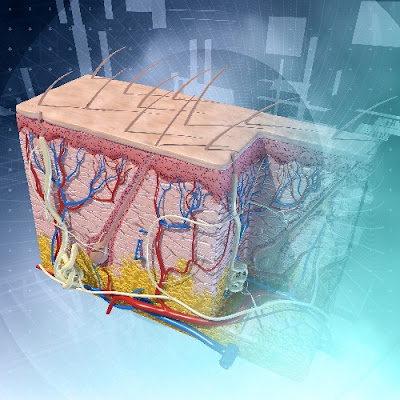
Biology of the Skin

The skin is the body’s largest organ. It serves many important functions , including regulating body temperature, maintaining water and electrolyte balance, and sensing painful and pleasant stimuli. The skin keeps vital chemicals and nutrients in the body while providing a barrier against dangerous substances from entering the body and provides a shield from the harmful effects of ultraviolet radiation emitted by the sun. In addition, skin color, texture, and folds help mark people as individuals. Anything that interferes with skin function or causes changes in appearance  can have important consequences for physical and mental health.

Blistering Diseases

A blister (bulla, or, when small, a vesicle) is a bubble of fluid that forms beneath a thin layer of dead skin. The fluid is a mixture of water and proteins that oozes from injured tissue. Blisters most commonly form in response to a specific injury, such as a burn or irritation, and usually involve only the topmost layers of skin. These blisters heal quickly, usually without leaving a scar. Blisters that develop as part of a systemic (bodywide) disease may start in the deeper layers of the skin and cover widespread areas. These blisters heal more slowly and may leave scars.

Fungal Skin Infections

Fungi usually make their homes in moist areas of the body where skin surfaces meet: between the toes, in the genital area, and under the breasts. Common fungal skin infections are caused by yeasts (such as Candida— or dermatophytes, such as Epidermophyton, Microsporum, and Trichophyton . Many such fungi live only in the topmost layer of the epidermis (stratum corneum) and do not penetrate deeper. Obese people are more likely to get these infections because they have excessive skinfolds. People with diabetes tend to be more susceptible to fungal infections as well.

Hair Disorders

Hair originates in the hair follicles. These follicles are located in the dermis, the skin layer just below the surface layer and above the subcutaneous fat. Hair follicles are present everywhere on the surface of the body except the lips, palms of the hands, and soles of the feet. New hair is made in the hair matrix at the base of the hair follicle. Living cells in the hair matrix multiply and push upward. These cells rapidly dehydrate, die, and compact into a dense, hard mass that forms the hair shaft. The hair shaft, which is made up of dead protein, is covered by a delicate covering (cuticle) composed of platelike scales.

Hypersensitivity and Inflammatory Skin Disorders

Hypersensitivity and inflammatory skin disorders are caused by immune system reactions that involve the skin.

Itching and Dermatitis

Itching can be very uncomfortable. It is one of the most common reasons people see doctors who specialize in skin disorders (dermatologists).

Nail Disorders

Many disorders can affect the nails, including deformities, dystrophies, infections, and ingrown toenails. Infections can involve any part of the nail and may or may not change the nail's appearance. Most nail infections are fungal (onychomycosis—, but bacterial and viral infections occur.

Noncancerous Skin Growths

Cells of the skin and underlying tissue may accumulate and cause growths. Growths may be raised or flat and range in color from dark brown or black to flesh-colored to red. They may be present at birth or develop later.

Parasitic Skin Infections

Most skin parasites are tiny insects or worms that burrow into the skin and make their home there. Some parasites live in the skin for part of their life cycle. Other parasites live in the skin for their entire life cycle. Parasitic skin infections frequently cause severe itching and inflammation. Parasitic skin infections include

Pigment Disorders

Melanin is the brown pigment that produces the various shades and colors of human skin. Coloration (pigmentation) is determined by the amount of melanin in the skin. Without melanin, the skin would be pale white with shades of pink caused by blood flow through the skin. Fair-skinned people produce very little melanin, darker-skinned people produce moderate amounts, and very dark-skinned people produce the most. People with albinism have little or no melanin and thus their skin appears white or pale pink. Usually, melanin is fairly evenly distributed in the skin, but sometimes people have spots or patches of skin with more melanin. Examples of such spots include freckles, age spots ( lentigines), and melasma.

Pressure Sores

Pressure sores are areas of skin damage resulting from a lack of blood flow due to pressure.

Psoriasis and Scaling Disorders

Psoriasis , pityriasis rosea , lichen planus  Lichen Planus), and lichen sclerosus ( Lichen Sclerosus) are different skin disorders that have been grouped together because the bumps, rashes, scales, and skin discoloration they cause have similar characteristics. That is, the rashes and bumps have well-defined borders, and the scales usually do not crust, crack, or weep with fluid.

Skin Cancers

Skin cancer is the most common type of cancer. Skin cancer is most common among people who work or play sports outside and among sunbathers. Fair-skinned people are particularly susceptible to developing most forms of skin cancer because they produce less melanin. Melanin, the protective pigment in the outer layer of skin (epidermis), helps protect the skin from ultraviolet (UV) light. However, skin cancer also can develop in dark-skinned people and in people whose skin has not had significant sun exposure. Skin cancers may also develop years after x-ray therapy or exposure to substances that cause cancer (for example, ingestion of arsenic).

Sunlight and Skin Damage

Sunlight stimulates vitamin D production, helps control some chronic skin diseases (such as psoriasis), and causes a sense of well-being. Yet sunlight can also cause damage to the skin. Damage includes not only a painful sunburn  Sunburn) but skin cancers, wrinkling and other changes associated with aging skin, and even allergic reactions and worsening of some skin diseases ( Photosensitivity Reactions). The skin shields the rest of the body from the sun's rays.

Sweating Disorders

Sweat is made by sweat glands in the skin and carried to the skin’s surface by ducts.

Treatment of Skin Disorders

Topical drugs (drugs applied directly to the skin) are a mainstay of treating skin disorders. Systemic drugs are taken by mouth or given by injection and are distributed throughout the body. Rarely, when a high concentration of a drug is needed at the affected area, a doctor injects the drug just under the skin (intradermal injection).


Viral Skin Infections

Many viral infections, such as measles ( Measles), chickenpox (Chickenpox), and rubella ( Rubella), cause rashes, spots, or sores on the skin, as well as other symptoms. Herpesviruses often cause rashes and sores (Herpes Simplex Virus Infections). However, in two common viral infections, warts ( Warts) and molluscum contagiosum (Molluscum Contagiosum), the virus remains solely within the skin and does not spread to other parts of the body.

Photosensitivity Reactions


Sunlight can trigger immune system reactions.


    People develop itchy eruptions or areas of redness and inflammation on patches of sun-exposed skin.

    These reactions typically resolve without treatment.

Photosensitivity, sometimes referred to as a sun allergy, is an immune system reaction that is triggered by sunlight. Photosensitivity reactions include solar urticaria, chemical photosensitization, and polymorphous light eruption and are usually characterized by an itchy eruption on patches of sun-exposed skin. People may inherit a tendency to develop these reactions. Certain diseases, such as systemic lupus erythematosus and some porphyrias, also may cause more serious skin reactions to sunlight.

Solar urticaria


Hives (large, itchy red bumps or welts) that develop after only a few minutes of exposure to sunlight are called solar urticaria. The hives typically last for minutes or hours. This disorder can be difficult to treat, but doctors may prescribe histamine (H1) blockers, antimalarial drugs, corticosteroids, sunscreens, or ultraviolet (UV) light therapy. A person can be prone to developing solar urticaria for a very long time, sometimes indefinitely. People with large affected areas sometimes have headaches and wheezing and feel dizzy, weak, and nauseated.


Chemical photosensitivity


Over 100 substances, swallowed or applied to the skin, are known to cause sun-induced reactions on the skin. A limited number cause most reactions ( Some Substances That Sensitize the Skin to Sunlight). To treat chemical photosensitivity reactions, corticosteroids are applied to the skin and the substance that is causing the reaction is avoided. There are two types of chemical photosensitivity: phototoxicity and photoallergy.

In phototoxicity, people have pain and develop redness, inflammation, and sometimes brown or blue-gray discoloration in areas of skin that have been exposed to sunlight for a brief period. These symptoms resemble those of sunburn, but the reaction differs from sunburn in that it occurs only after the person has swallowed certain drugs (such as tetracyclines or diuretics) or chemical compounds or has applied them to the skin (such as perfume and coal tar). Some plants (including limes, celery, and parsley) contain compounds called furocoumarins that make some people's skin more sensitive to the effects of UV light. This reaction is called phytophotodermatitis. All phototoxic reactions appear only on areas of skin that have been exposed to the sun. They usually develop within hours after sun exposure.

In photoallergy, an allergic reaction causes redness, scaling, itching, and sometimes blisters and spots that resemble hives. This type of reaction can be caused by aftershave lotions, sunscreens, and sulfonamides. Substances that cause photoallergy are capable of doing so only after the person has been exposed to both the substance and sunlight (because sunlight is what makes the substance capable of triggering photoallergy). Photoallergic reactions can affect areas of skin that have not been exposed to the sun. They usually develop 24 to 72 hours after sun exposure.

Diagnosis

There are no specific tests for photosensitivity reactions. A doctor suspects a photosensitivity reaction when a rash appears only in areas exposed to sunlight. A close review of the person's medical history, skin symptoms, any diseases, drugs taken by mouth, or substances applied to the skin (such as drugs or cosmetics) may help a doctor pinpoint the cause of the photosensitivity reaction. Doctors may do tests to rule out diseases that are known to make some people susceptible to such reactions (such as systemic lupus erythematosus).
When a rash occurs on an area of skin that has been exposed to the sun and the diagnosis is not clear, doctors may do skin patch tests and reaction reproduction tests that involve exposure to UV light (phototesting) when the person is not using any drugs that cause photosensitivity reactions. These tests may help clarify which type of photosensitivity reaction may be the cause.


Prevention and Treatment 


All people should avoid excessive sun exposure, but people who are sensitive to sunlight due to any cause should be especially careful and wear protective clothes, avoid sunlight as much as possible, and use sunscreens regularly. If possible, any drugs or chemicals that could cause photosensitivity should be discontinued after consulting with a doctor.
 

People with polymorphous light eruption or photosensitivity caused by systemic lupus erythematosus should be seen by a doctor and sometimes benefit from treatment with corticosteroids applied to the skin or hydroxychloroquine or corticosteroids taken by mouth. Occasionally, people with this problem can be desensitized to the effects of sunlight by gradually increasing their exposure to UV light .